Sunday, 22 July 2012

The Silent Land

Amid a stormy and overcast day, the Cape Town Ten set out for yet another adventure—this time to Robben Island, the famed historical site of Nelson Mandela’s incarceration. We arrived at the Waterfront at noon, and, after an extraordinarily gifted speaker gave us the most majestic safety speech ever, we took off on a ferry for the island just as the sun started to break through the clouds.
Awkward smiles to start off the day!

The ferry was one of the few incidents we’ve had to experience Cape Town from sea,  so, naturally, we took plenty of pictures. We laughed and hung on to railings for dear life as the boat bumped and shot its way across the water, while sea mist sprayed us from all around. A few times we even saw the elusive end of a whale diving in the distance or boxhead jellyfish floating, pale and ghostly, beneath the surface.

Tyler and Christina stop to ponder Cape Town.
An hour later, we landed in Robben Island’s harbor. As we dismounted shakily from the boat, we were promptly greeted by an old face—Ilyas, our guide from Bo Kaap (see Christina’s post). During our hour long bus tour of the island, we learned quite a bit about Robben Island’s colorful history. First colonized in the seventeenth century by the Dutch, who named it after the plentiful seal colonies they saw on land, the island was mainly utilized as a leper colony, a quarantine station and an isolation spot for political prisoners.

We passed by the leper graveyard and learned of some of the more famous prisoners that stayed on the island—Xhosa leader Makanda Nxele, who led an uprising at Grahamstown in 1819, and more recently, the political activists, dissidents and freedom fighters of the apartheid period.

“How many of you guys know Nelson Mandela?” Ilyas asked as we passed by a small prison complex. Everyone on the bus raised their hands. “Now, how many of you know Robert Sobukwe?” There was silence on the bus, as most of the predominantly tourist crowd looked at each other, shrugging their shoulders. A Zulu man in the back raised his hand high.

We soon learned that this small prison yard we had stopped with was “the smallest prison in the world”, built specifically for one prisoner—Robert Sobukwe, whose intriguing story and defiant fight against apartheid places him among the ranks of Mandela, yet, as Ilyas laments, is still widely unknown in the world. The highly influential leader of the Pan-African Congress was arrested in Soweto protesting the Pass Law of 1960 that required all black Africans to carry passbooks with them at all times to separate them and limit their mobility. Seen as highly dangerous because of his radical ideas, Sobukwe was confined alone under a special clause written just for him until he died.
The World's Smallest Prison -- Sobukwe's Solitary Confinement Camp

The hour long tour ended with a stop at the famous limestone quarry where Nelson Mandela and other political prisoners worked during the day under backbreaking conditions as part of their internment. Later on, at a reunion, Mandela started a rock pile which was added to, one rock at a time, by all the ex-prisoners. The pile is a testimony to the bond that was forged in those difficult times, and the resistant spirit that the prisoners kept even under their hard labor.


The quarry. Note the pile of stones--Mandela's work.

The last part of the tour was what we were all waiting for—a tour of the actual prison complex, by one of the ex-prisoners. As we walked by concrete rooms with barred windows and empty courtyards surrounded by high walls, barbed wire and guardhouses, we learned about the brutal system that was used to break the prisoners here—the few opportunities they had to communicate with their loved ones and the draconian methods used to punish resistance organizations within the prison.

Yet, despite the prison’s best efforts, they could not contain resistance. “Politics was all we ever talked about—that was why we were there,” said our guide. The senior political prisoners who were higher up in the ANC would teach those confined with them, and classes would be organized to educate all the prisoners on politics. Material for discussion and lessons were hidden under pillows, stuffed in shoes and wherever they could hide it. They knew they were going to be released—they had faith to understand that the apartheid system was going to collapse, and they prepared, eagerly, for their release at any time. And so, behind concrete doors, in whispers at night, the prisoners dreamed, brainstormed and laid out the political structure of South Africa today.

Concrete, barred windows, bunk beds. The conditions.

Note the concrete. And the sky. This is vaguely symbolic.

This is extremely symbolic.  
Guard tower, and more barbed wire.

More concrete! And sky! Ponder the silence conveyed in this picture. 

The guard tower from outside the prison system. 
 As Mandela suggests, Robben Island was much more than just a prison system, but a

 “a celebration of the struggle and a symbol of the finest qualities of the human spirit.” As we ended the tour by passing by Mandela’s own personal cell—a modest, square room with nothing more but a creaky wooden stool, a chamber pot and a roll of bed linens, I realized then that despite the brutality of being confined for most of his adult life, it was ultimately prison that imparted to him much of the patience, wisdom and forgiveness he needed to lead the nation.

Indeed, as we left the facilities that were once grim but now hopeful, once repressing but now educational, I got a sense of what he was talking about.


Glorious. 

Monday, 16 July 2012

Face Fear: JHU vs. World's Highest Bungee Jump

I remember the first time I went on a rollercoaster. I was in sixth grade, and my family was on vacation in Las Vegas with several other family friends. In typical tourist fashion, we were exploring all the hotels on the strip. Our last stop was at New York New York, the hotel inspired by the Big Apple. While it was not an extraordinary hotel (I can vaguely remember the décor), the kids were all excited because of the rollercoaster at the top. Being a naïve middle schooler, I had no idea or concept of what riding a rollercoaster would be like, except that it would be “fun” and “exhilarating”. So, following my big brother and all of my friends, I sat in the plastic seat. The climb to the first drop was terrifying. I remember taking one look at my surroundings (tiny buildings, the Vegas strip a thin line, and endless sky) and closing my eyes shut. I didn’t open my eyes for the entire ride. I didn’t even scream. I simply hunched down in my seat, with my heart pounding a million beats per minute, my teeth biting the inside of my cheek so hard I tasted blood after. When the ride was over and everyone was ecstatically saying how fun the ride was, I smiled and pretended like I enjoyed it too. Except, I didn’t. I hated it.

I’m not sure why heights scare me so much. I have this theory that it is biologically based, as my mother has a similar fear. Even standing by the railing of the second floor in a mall freaks me out. And it’s not as if I haven’t gone on a rollercoaster since; I have. But it’s not something I would ever willingly do myself. But there is something about one’s greatest fear that is also fascinating; it’s actually very masochistic. On flights, I always sit by the window seat with very morbid thoughts running through my mind: What if the plane malfunctions? What if we just…drop? So when everyone talked about bungee jumping and skydiving at the very first study abroad meeting, I smiled to myself and thought, “Absolutely not”. There was no way I was going to throw myself off a bridge or plane. Not a chance. Even when we were planning our road trip to Jeffrey’s Bay and the stop at the Bloukrans Bridge to bungee jump, I didn’t budge. The game plan was that everyone else was going to jump, and I was going to take pictures. End of story.

During the drive to Bloukrans Bridge, everyone was nervous (even all of you who said you weren’t… I KNOW you were). When we drove over the bridge, our jaws dropped; the bridge was a LOT higher than we thought it would be. As we drove into the parking lot, we blasted music to pump ourselves up. Everyone kept saying to me, “You must be so relaxed, you’re not jumping”. Except I wasn’t calm, I was freaking out inside; just being so close to edge and seeing the bridge from afar was scary. I couldn’t even begin to imagine jumping off. After we parked and went to the bathroom (necessary), everyone went to sign their lives away and to get weighed and harnessed. Getting weighed is really important because your weight determines the rope that you get attached to. Since I didn’t want to be left behind, I decided to go with everyone onto the bridge and to watch from there. That was one of the best decisions I ever made.


Bloukrans Bridge.
They mark your hand with your weight in kg (top) and jump number (bottom).
The time slowly counted down… and then it was time. We all walked over to the side and met with our guide, who would be taking us across the bridge. Everyone had a huge smile plastered on their face, whether from excitement or fear, I don’t know. In order to get to the jump off point, we had to walk through the woods and across an underpass. Walking across was terrifying; you realize how high up you actually are. Matt had to hold my hand as we walked (thanks Matt!). The underpass didn’t seem very stable, and all I could think was “It’s going to break, it’s going to break”. But it didn’t, and we got to the jump off point safely. There was music blasting, so everyone started to dance in order to prepare mentally and physically for what was going to happen.
Bridge to jump off point.
It's a longgggg way down.
There were a few other people with us, but the order that our group was going to jump was Audrey, Fatu, Ling, Allen, Matt, Emily, Ndu, and Tyler. Before Audrey jumped, we came together in a pre-game huddle. Except this wasn’t football, this was a 216m high bridge. Who in their right minds would willingly do such a thing? The 8 people that I was with, that’s who. When Audrey jumped off, I remember screaming—one second she was standing on the edge, and the next, she was gone. But when she came back, she was full of adrenalin and yelling, “Oh my god, that was the best experience ever! I want to do it again!!!”

I don’t think anyone else realized, but it was equally as terrifying watching everyone jump off. Even though they each came back safe and elated, I couldn’t help but think of Agatha Christie the whole time: “And then there were …” When it was Tyler’s turn, one of the workers came up to me and said “Are you sure you don’t want to go? I can tell you want to. You don’t want to regret it, you know”. Before I knew it, I started to cry. I’m not sure why, but I think it was because I was being confronted with the one question that I was dreading the whole time: Did I want to jump or not? Because on one hand, my entire body was resisting the idea of jumping off, but what other chance would I have to be back in South Africa? Would I regret this later? I didn’t want to leave South Africa with any regrets, but I was truly terrified. While everyone else comforted me, the worker kept saying to me, “You don’t want to regret it”. I’m sure that if I was any other person, I would have been really annoyed that he was so persistent. But I am so glad that he was. Because it was at that moment, I decided to jump. This was my only chance. There was no way I could go back home and tell everyone that I went to the highest bungee jump in the world and didn’t jump.

So I signed the consent form and got harnessed. I was literally shaking.. and I couldn’t stop crying. When the workers were attaching the ropes to my ankles, I took deep breaths and told myself over and over, “Don’t be such a wimp. You can do this.” I hopped over to the edge, the two workers supporting my arms on their shoulders. It was in that moment that I almost screamed out that I changed my mind—because standing on the edge, I could finally see how high up the bridge was. But the workers were adamant and told me to put my toes to the edge, and so I did. They told me to hold up my arms and to look straight out at the mountains. I’m pretty sure I mentally blacked out for a couple seconds because the next thing I knew, I was in the air… I was flying. The trees and the brook at the bottom got closer and closer, and then I was flying back up. It was incredibly peaceful—all I could hear was the sound of the water flowing in brook. I distinctly remember saying out loud “Wowww” because it was so beautiful and so serene, not at all like the scary experience I had envisioned previously. Eventually, I stopped bouncing up and down and was just hanging upside down by my ankles. This was when I started getting scared because it felt like I was going to slip out of the ankle support any second. I remember thinking, “If I fall, I’m going to die”. But I didn’t, and after a few seconds, one of the workers came to fetch me. During the ride up, he was making small talk but I couldn’t do anything but giggle like a maniac. I was so full of adrenalin, I felt like I could’ve run for five miles without stop. 

There was something in my eye, I swear.
Preparing for jump off.

I'm a bird!
I still can't believe I did this.
On the way back up.
Looking back on it now, I am so glad that I jumped. Though, I’m not convinced that I am fully cured of my fear of heights and of free fall... I’m pretty sure that if I had to do it again, I would still cry. But, jumping off proved that I am capable of overcoming my fear. And that is exactly the kind of thing I came to South Africa for. But I really couldn’t have done it without everyone’s support. Like The Beatles said, “ I get by with a little help from my friends”. 


Christina Li

Thursday, 12 July 2012

Ikamva Labantu: A Brief Overview

Greetings from Cape Town!

For the past five weeks, Ling and I have had the good fortune of interning at Ikamva Labantu for our community based learning portion of our Cape Town study abroad program.

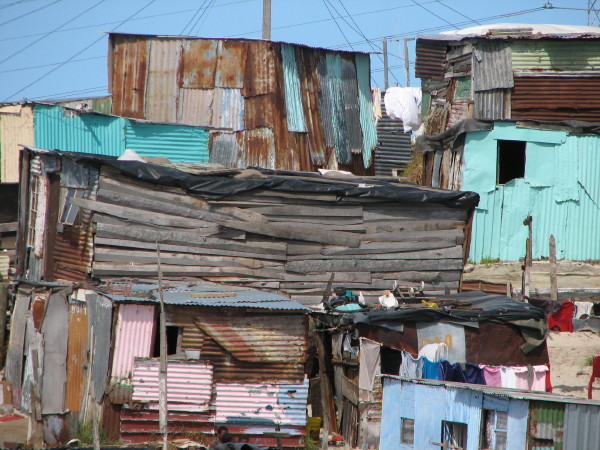
Ikamva Labantu was founded in the 1960's after Helen Lieberman, a speech therapist, ventured into a Cape Town township. As a white woman, Lieberman was shocked by the drastically different living conditions for the black and colored citizens of Cape Town (disclaimer: colored is an acceptable and widely used term here in South Africa for people of racially mixed backgrounds). These disparities were created by Apartheid, a racially charged policy that separated South Africans according to race. Apartheid began in 1948 under the racist National Party, so when Lieberman entered this township she immediately witnessed the appalling impact this policy. To give you an idea of what she saw, here is a photo of a township located in the outskirts of Cape Town:


Lieberman was inspired by the spirit of people in this township and decided that she must do something to help those living in such horrible conditions. Along with the help of some women living in this township, Lieberman founded Ikamva Labantu. The primary goal of Ikamva Labantu is to teach township citizens valuable skills and provide them with resources as a means to eventually become self-sufficient. According to Lieberman, her mission as an NGO founder is fulfilled when she is told that her clients do not need Ikamva Labantu's help anymore.

Today, Ikamva Labantu is divided into three divisions: Community Health, Community Learning and Development, and Community Resources. Ling and I have spent our time working with the Community Health division, which focuses on preventative health, physical well-being, nutritional health, mental health, and managing illnesses and diseases, including HIV and AIDS.  Our daily assignments require us to visit either daycare centers, orphanages, or senior citizen community centers. In all of these places, we complete health evaluations that will eventually help Ikamva Labantu determine how to appropriately allocate resources for its clients.

When we visit a daycare center (or "crèche", the more common local term), we are always greeted by several small children who are curious as to why we are at their school. At first, I would always try talking to them, but I soon realized that they had no idea what I was saying. This is because most of them only speak Xhosa, one of South Africa's eleven official languages, when they are this young. Once Ling and I say hello to everyone at the center, we interview the school principal, asking questions about the health status of the children. After we finish with our interview, we help our translators (who are also employees at Ikamva Labantu) weigh and measure the heights of the students. Here is a photo of Ling measuring a child's height at a daycare center:


Our duties at the township orphanages are pretty similar to those at a daycare center. The main difference, however, is we are able to ask more detailed questions about the children since orphanages typically do not have nearly as many children as the daycare centers. I personally prefer interviewing the foster mothers at these homes instead of the daycare principals because most seem to know their children quite well. Here is a photo from my experience at an orphanage:

Beginning late last week, Ling and I started our work at the senior citizen community centers. These centers are very similar to those in the United States because the purpose of each center is to provide seniors with constructive activities, hot meals, and a place to socialize with peers. I really like working with the older township population because they all seem genuinely happy that we are there to talk to them and learn about their fascinating lives. A particular instance that stands out in my mind is from when an elderly woman told me about how she was forced out of her home in downtown Cape Town when Apartheid began. She reminisced about how her life was so much better before Apartheid struck because people of all different backgrounds lived nearby one another. I will always remember the conversation that I had with this woman because it allowed me to put a face to all of the history that we have learned about thus far on our overseas excursion.

A friendly client at a senior citizen community center.
Alright, I think now is a good time for me to stop rambling about my experience at Ikamva Labantu and pass the torch along to Ling, who will share some of her highlights and personal stories with you.

Until next time,

Matt, '14

Photo Credits:


Tuesday, 10 July 2012

Hopkins students in the paper!

The Monday Paper, that is - The University of Cape Town's version of the JHU Gazette:
http://www.uct.ac.za/dailynews/?id=8171

David Worth, our host in UCT's Centre for Open Learning (http://www.uct.ac.za/continuinged/col/), contacted the paper suggesting that they come and see our program in action, and we were contacted the same day!  Here are the students in their classroom with instructor, Anna Grimsrud:
Student Christina Li 


      Enjoy the full story!

Saturday, 30 June 2012

What Lies Beneath


"We are going to need a bigger boat..."
            We silently made our way down the street in the pre-dawn darkness while a light rain brushed our faces.  When we arrived at the Rose Bank Metrorail Station it was deserted save for one lone security guard sitting beneath the fluorescent lights above the platform.  He pointed across the tracks to platform three.   After a few minutes the 5:30am train squealed into the station and we boarded for our hour-long coastal journey to Simon’s Town, where we would be taken out to Seal Island to meet the world renowned South African Great White Sharks.
            After 45 minutes of nodding off between pages of our “Public Health in South Africa” assigned reading we began to hear the sound of waves.  We opened the sliding windows and were greeted by the moist, salty smell of the coastline.  Beyond the passing sand dunes lay the Atlantic, cold and frothing under the still black sky.  We kept our heads hung out like dogs on the open road until we came to a stop at our final station.  The rain had intensified as the clouds travelled down the nearby mountainside and we frantically jumped into a cab heading towards the pier.
            Rob, our Skipper and guide, met us at the end of the pier and beckoned us out of the rain and into the warmth of the Blue Pointer’s wheelhouse.  Here on the boat we met Naomi, a marine biology intern from Nova-Scotia, and RJ, a weekend warrior and amateur wildlife photographer from Johannesburg.  Two other crewmembers quickly unhitched us from the dock and Rob set course for Seal Island as we pulled out of the rainy marina.  We all sat in silence as Rob manned the helm.  During the thirty-minute ride out to the island we all wondered what lay ahead and what lay lurking under our boat…

Looking back at Simon's Town

            After awhile, the Skipper cut the engine and walked out onto the top deck.  It had stopped raining and we could now see a rocky outcropping in the middle of the sea in the dawn light.  We made our way out to the deck and were greeted by the barking of some 2,000 Cape Fur Seals, heckling us from their rocky perches.  
The Cape Fur Seals and Friends
Seal Island
A couple of African Penguins in the mix


Without a moment to lose Rob got back to the wheel and began circling the island for signs of “predation”– Great Whites hunting seals in their natural state (i.e. no chumming or human involvement).  Almost immediately we saw the first slash of a black dorsal fin and the ensuing white foam about a hundred meters of the starboard side.  As we raced to the scene of the attack the 4 meter long shark lunged again at the helpless seal and a brilliant red cloud of blood bloomed in the water as the shark dipped back below the surface, out of sight.  It all happened so fast that we could hardly believe we just saw our first great white shark­– it was unreal.  The pelagic sea birds were on scene to scavenge the few seal remains seconds after the first bite– the birds were natural signals of an attack.  After two more predation sightings and a failed attempt at dragging the foam decoy seal behind the boat, the crew prepped the cage.


Is that an over-sized lobster-trap?  No, that's the cage.


  After witnessing the sharks rip apart their breakfasts the cage seemed a little bit smaller and flimsier than before.  All of the sudden I found myself convinced that the cage’s steel bars were spaced too far apart.  Surely a one-ton apex predator could find his way in if he wanted to, right?   I shrugged the thought off as I squeezed into my dive gear and donned my weight belt.  While Matt and I suited up for the first round in the cage the others broke into screams of awe and delight from the back of the boat.  We dashed across the deck to find everyone gawking at a 4.5-meter shark circling the submerged cage.  Rob and the crew were going nuts! They were commenting on the size of the black monster that cruised just below the railing.  The white shark took one last passing glance at us and meandered off into the distance, its dorsal fin slowly sinking beneath the waves.  I could have sworn the thing winked at me… almost as if to say, “Don’t forget to close the cage door.”

            Matt and I strapped our masks on and walked to the port side where the cage thrashed against its rope restraints in the rolling swells.  

Naomi leaned over the rail and opened the top hatch.  She ushered us in with a big grin and Matt loped over and into the steel contraption with a dull splash.  As I stepped up to the rail I had the brief and unfortunate realization that it was possible to completely overshoot the cage opening.  I quickly readjusted myself over the middle of the cage and rolled into the cage in the feeble position.  The weight belt brought me straight to the floor of the cage and I sat there for a second in the cold and green.  I nervously sprang back up to the surface to receive my respirator that would provide air from a cylinder on the boat.  I took a few small, quick breaths to make sure the apparatus was working and let the weight belt take me back down into the unknown.

            I found the hand and foothold extensions at the bottom of the cage and made sure none of my appendages or digits were hanging outside.  After I nestled down I turned to find Matt casually sitting on the floor of the cage, looking around him like a toddler in the park.  His relaxed and curious demeanor made me feel unjustifiably tense in comparison.  I rolled my shoulders back and took a slow, deep breath from my respirator sending a cascade of bubbles towards the surface as I exhaled.  It was cold and quiet.  I could see the boat’s twin propellers slowly feathering in the current, but beyond that it was nothing but the green iridescence of the sea all around us.  All of the sudden a rhythmic thumping began to emit from the bottom of the boat.  It was RJ hitting the deck with a two by four in hopes that the acoustics would attract a curious beast.  I couldn’t help but think he was summoning the kraken.
            RJ continued to send sound waves out into the greenness until he stopped all at once and the distorted sound of shrieks from the group made me turn my head.  There it was, the thing that had haunted my dreams ever since I started watching shark week as a kid, the bleached white belly of a Great White Shark.  The shark was about 4 meters long and swimming perpendicular to the surface as it struggled with a tuna head attached to a rope.


I hurriedly tapped Matt on the chest and motioned for him to turn around.  The shark, seemingly sensing he was being watched, quickly leveled off and swam out of our view.  Matt and I looked out after it with our breath held, but it never came back.
          

After about ten minutes of no movement we jumped back to the surface and climbed out.  My initial nervousness had faded and we both took off our masks hooting and hollering about what we had just seen.  The group was ready for their turns;Allen and Ling suited up and jumped in soon after us.


Not five minutes after they entered the water then a 4.5-meter shark began feeding on the bait directly in front of their cage.  The shark made multiple passes within feet of the cage and from the deck we could make out every detail of the beautiful animal.  It was like nothing I had ever seen before– this shark was huge.


This behemoth continued to put on shows for everyone in the cage.  Matt and I jealously and patiently waited for another chance to get up close and personal.

            Meanwhile on the upper deck we began to learn about Rob and his knowledge on these predators.  Seal Island is one of six Great White hot spots worldwide and though they are abundant in the right seasons certain aspects of their migratory patterns and reproductive behavior are still virtually unknown.  The majesty and mystery of these animals has kept him in this business for 16 years and counting, and has also attracted a number of notable celebrities including Tiger Woods, Jeff Corwin, the Myth Busters crew, BBC’s Blue planet crew, Discovery Channel’s Planet Earth Crew, and a failed visit by the Wild Boys.  Unfortunately when Steve-O and Chris Pontius revealed to Rob their plan to jump off the boat, over the great whites, and into a cage he had to refer them to another charter company, one that would have as little common sense as those two.
            After a good laugh or two it was time for Matt and I to get redemption.  We donned our gear once more and plunged into cage.  The seas had become choppier during our wait and we bounced around like helpless lobsters in a trap.  We hunkered down at the bottom of the cage and waited patiently for the 4.5-meter beast to give us one last adrenaline rush.  After ten minutes it seemed the shark had left us waiting in vain and Matt and I searched hopelessly all around.  Just when I had begun to climb to the surface I saw a flash of grey below my feet.  It was the behemoth… and it was the most beautiful thing I had ever seen.  Matt and I watched for five minutes as he gracefully circled the boat about 2 meters below us.  As Matt and I sat there in trance by the tranquility of this ferocious predator I couldn’t help but feel like this animal knew what we were.  It was as if he knew that he could break our cage in two and eat its contents, but he simply did not have a craving for public health majors.  Suddenly, he made one last loop and gently careened off into the great green sea…
Though it may seem small in this picture
this shark is about 13 feet long and weighs
somewhere around a ton...

            Once again we sat in silence as we rode back to the shelter of the marina.  I do not think it was quite believable what we had just experienced.  The whole excursion was surreal.  What I do believe is that we all have a new and profound respect for these animals, and all of the majesty they possess.  There is an immutable feeling that is engendered through an encounter with something that has the capability of taking your life.  I can’t say it is humbleness, but rather reverence.  Whatever the feeling was, it rose into us much like the sun rose over the clouds on our train back home.


Written by Tyler Woods

(Photography courtesy of Audrey Leasure and Tyler Woods)

Township Tours!!!


The township tours have been one of my top experiences in Cape Town thus far.  We visited townships in Soweto, Langa, and Heideveld.  It’s fascinating to see how different one township is from the next and to learn of its culture.  The township tour in Soweto was by far my favorite; I think because we were actually living in Soweto while we did the tour so it felt like we were one of them.  And the workers at Lebo’s Backpackers are phenomenal!  They crack jokes with you and hang out with you next to the fire at night; they know almost everyone in their community and are well respected.  What’s also interesting about these townships is how close they are to their nice urban area counterparts.  It crazy because one minute you’re on campus at the University of Cape Town and just a 10 minute drive you’re at the township of Langa.  This shows how great the inequalities are here.

The township tour in Soweto was awesome.  All we had to do was go across the main road with our awesome bikes and we were in the poorest township in all of Soweto.  The best thing about the township and all the other townships was the sense of community you witnessed.  Despite the hard living and financial conditions, people still had smiles on their faces and little babies were running around laughing and the elders were drinking beers and conversing.  The township we visited used to be a hostel during the Apartheid years.  Men were forced to live there away from their wives and family.  They would get to see them maybe twice per year.  This separation helped increase the rate of HIV transmission because men would have sex with men and with sex workers in Johannesburg.  The coolest part about the visit to the township was tasting the traditional beer and learning the history behind it.  One of the older men of the community explained the technique of making the traditional beer.  They use bread, corn, and some kind of material to squeeze out the beer.  He explained that any event that occurs, whether it be a party, gathering, meeting, etc., must have traditional beer.  It’s more for the older folk because that’s what they’re used to drinking.  He also but on this headgear thing on some of the guys and jewelry on Lisa and Chantel.  It was really beautiful.


                                                       Ndu and his awesome headgear


                                                   The materials for the traditional bear and
                                                         the beads Chantel and Lisa wore

Another township tour we did was in a black township in Langa.  This was another form of separating the different races during Apartheid.  I found it somewhat intriguing that even today the townships are separated; although I’m sure it’s because of tradition and not because of government laws.  The township in Langa was like any other.  There are parts where the homes are basically trailers and you have areas where the homes are made of more durable material.  The first place we went to was a lady’s home that she turned into a restaurant.  It was beautiful.  There was African art everywhere, cool statutes, inscents and a balcony.  Her and her son were explaining the culture of the township.  Basically your family isn’t just your mom, dad, and siblings.  Your family is considered as anyone who is in the same tribe as you.  They started speaking their language called Xhosa which has clicks in it and is hard for many people to master.  It was funny because we asked the mother and his son to carry a conversation and the son kept laughing because he said “it’s funny because it sounds like music to you.”  It was interesting because the way the mother did her clicks were much harder than her sons.  I didn’t know how much variability there was.  The mother also explained how much of a community thetownship is.  No one locks their doors at night because they all trust each other.  The tight knit community feel is one of the main reasons many people enjoy living in the townships.  Currently there’s a slow process of moving some people out of the township to better homes funded by the government.  But the people who move find it very lonesome because their neighbors aren’t family, they’re just people next door. 

 The tour of the colored township was very interesting because we visited a “daycare”.  The reason for the quotes is because it’s technically not a daycare that’s recognized by the government.  There are some regulations that haven’t been met such as the number of windows so cross ventilation is made possible.  The reason this regulation can’t be met is because each wall of the house is bounded by another wall of someone else’s home.  So technically there’s no possible way to have two windows even if she does make one in the roof.  I really admire the lady in charge of the daycare.  She explained that it first started off as a few parents dropping off their kids at her home while they went to work or something of the sort.  They all trusted her and soon it gradually grew to 30 kids that she has today.  There’s a very small room where the kids lay and play.  She has 30 mats that she places in some unique configuration while the kids nap; very innovative.  Some of the kids that go there are from dysfunctional homes whether it be drugs and alcohol, abuse, neglect, etc.  And it’s unfortunate because she can’t accept all the kids because of the limited amount of resources and money she has.  But how can she turn away a child in need?  The only money she receives is the fee from the parents and her own money.  She doesn’t get any money from the government.


                                                                 The cute daycare!


Saturday, 23 June 2012

Bo-Kaap - uniquely Cape Malayan, delightfully colorful

On Saturday 16/6/12 (I'm still getting used to this way of writing the date), we toured Bo-Kaap, another neighborhood in Cape Town that is full of history, rich culture, and friendly people. Bo-Kaap is a mainly Cape Malay community, where the people are descendants of the Southeast Asian slaves that were brought over to South Africa during the Dutch rule. The term 'Cape Malay' is kind of misleading, as the slaves were not only from Malaysia, but also from Indonesia, India, and the Philippines. Since we have been in South Africa, we have visited many different townships and communities. Though each has their own culture and history, a connecting thread between all is that the people are very close, warm, and welcoming (even to loud, foreign American students!).

The iconic colorful houses of Bo-Kaap.
This is 1 of the 50+ pictures I took of them.
Ilyas, our tour guide who was born and still currently resides in Bo-Kaap, first took us to the slave lodge museum, right next to Parliament. The slave lodge was where the slaves resided; Ilyas also showed us the area where slaves were sold (it is now a busy, urban street corner). We then walked up to Bo-Kaap, which is located on the slopes of the mountain above the city center. Thank goodness it was a warm and sunny day, otherwise I am not sure I would have made it up those steep streets.

We first visited one of the numerous mosques in Bo-Kaap. Way back in the day, there was only one mosque in Bo-Kaap. Because everyone in the neighborhood went to that mosque, the community was very tight-nit. Today, there are numerous mosques, so the sense of community isn't as strong as it once was. Visiting the mosque was a great experience, as I have never been in one before. It was quite beautiful. As we left the mosque, we witnessed a wedding that was taking place outside. It really reinforced the sense of community of the neighborhood.
One of the many mosques in Bo-Kaap. 
The carpet faces toward Mecca. 
We also visited the Bo-Kaap museum, which is converted from a house that dates back to the 1760s. Before we began the real walking part of the walking tour, Ilyas took us to a corner market, which smelled AMAZING. Since I really love Southeast Asian cuisine (Indian is my favorite), standing in the market and smelling all of the wonderful spices was so much fun.
I wasn't as keen on the pigeon food however.
Armed with bottles of water, we began walking through Bo-Kaap. All the houses were so colorful! Ilyas told us that the Cape Malay people think of painting their houses in the same way women consider picking out a dress to wear to a party; no one wants to wear the same dress. So, no two houses can be painted the same colors. This was especially significant during apartheid, when the government placed restrictions on the Cape Malay people, who were classified as Colored. Painting their houses was a way they could express themselves. Bo-Kaap also participates in the Carnival street festival that takes place on January 2nd. This carnival allows every community in Cape Town to celebrate their individual cultures and unique music.
Unique Cape Malay culture is even reflected in the houses' steps.
Ilyas, our tour guide, showing us drawings.
Though Bo-Kaap is very different from the other townships that we visited, such as Soweto, it has its own culture that is truly fascinating. Not to mention, the houses are absolutely beautiful. I hope to return soon, especially to that spice shop that was unfortunately closed. I just can't get enough of spices. 
Beautiful Bo-Kaap houses and Table Mountain.
Christina Li