Sunday, 22 July 2012

Taming The Lion

Cape Town is world famous for the Table mountain range which forms a cradle around its metropolitan area, the city bowl. I would be liar if I said hiking up these land masses was anywhere near on my “what to expect” list. As it turns out the group of us who came on the trip are pretty athletic, most of whom had no qualms about waking up early in the morning and squeezing in a workout to our already jam packed schedule and of course your friendly neighborhood climbing enthusiast, Allen. When the idea of hiking was brought up I wasn’t too opposed but I wasn’t as excited as some either. In my younger days I had been on some pretty formidable hikes if I may say so and I felt prepared but they were activities that were part of a program. I never thought, or had much interest in, voluntarily hiking a trail.


Lion's Head Hiking Team

My Saturday morning sleep was interrupted by Matt bursting through the door, “You’re still asleep? Get up we’re about to go hike Lions Head.” Before I could say anything he was out the door again. That exchange truly was the M.O. for the entire trip, everyone always rolling with the punches, but I wouldn’t have it any other way. Lion’s Head is actually supposed to be an easier level trail but after some time on the steep rocky trail I couldn’t help but think that the difficulty level needed to be re-evaluated, but it was probably more me than the trail. Though it was challenging in my book we made it an adventure, taking pictures and a few detours along the way. The scenery on the way up was almost foreboding, giving us a glimpse of what was to come. I can’t forget to mention the appearance of Kerr, Lisa’s husband, running down the mountain greeting us with a “Hey Baltimore! You’re almost done!” and then off again as quick as he came. 


Quick detour overlooking Camps Bay

Quick picture on the way up!


As we got closer to the summit, the trail started to look more and more like the climbing wall at the rec center, still in the back of my head, “This is the easy trail?” Though it got dicey at the end the destination was worth the sacrifice. The top of Lion’s Head offers one of the best views of the city bowl and the harbor. A photo-shoot of epic proportion ensues with everyone wanting a piece of the regal backdrop to take home. But then everything slowed down and faded into silence. Matt laid flat on a rock with his legs dangling above a 2,000 foot drop with a blank look on his face. Everyone seemed too get that look in their eye, when they’re in front of you but not actually there. They've gone inside themselves, thinking, reflecting, on everything. I found there’s a certain existential experience associated with being at great heights. There’s always the wow factor once you reach the summit but when the initial feelings of excitement and accomplishment fade, sooner or later, everyone has a quiet moment to themselves. When everyone came back together there was just love and we were a bunch of college kids screwing around on the top of a mountain. Our Lion’s Head hike most definitely brought us closer together. There’s a certain uniting effect from sharing hardship and conquering as a unit and on the way down every rock has a story about how you climbed over it.


Photo-shoot!!


-Ndubisi Okeke

Discourse on Prevention Methods


     Over the course of my time here in South Africa, I have learned that the behaviors responsible for the rapid spread of HIV in South Africa are the product of an intricately woven web of cultural and societal norms, withstanding gender inequalities and economic conditions, environmental factors, and political landscape. As such, I have also become aware that HIV prevention will not be completely successful unless both the high-risk behaviors and the underlying social problems further down in the causal chain are addressed by interventions. For example, although condoms may be available, gender inequalities at a structural level, in the form of male dominance and female economic dependence, stop people from using them.

Condom Education


     Although it is obvious that societal issues first need to be addressed before people will change their behaviors, it is not obvious how to go about actually doing this. I feel the best way to at least start addressing these issues is through hybrid intervention strategies that incorporate prevention methods from behavioral, harm reduction and biomedical models. Examples of this type of intervention include voluntary counseling and testing, which aims to decrease transmission and stigma by making people aware of their status, condom marketing, which aims to change social norms about condoms by increasing access, knowledge, and social acceptance, and social mobilization, which aims to reduce stigma and drive the uptake of HIV prevention and treatment services through educating the community about HIV services and testing. I think these methods are particularly effective at a community level because not only do they make health services widely available, but also they educate people about why these services are necessary and, in doing so, increase exposure to HIV prevention materials and hopefully reduce stigma.


Community Education and Mobilisation


     Cultural norms, and thus the groups of people that are primarily affected by HIV, differ in both South Africa and the United States. In the United States, people generally share the assumption that diseases are germ based. In South Africa, different cultures have different beliefs about what causes diseases. Thus, on a structural level, South African citizens and US citizens will have different attitudes towards western medicine, treatment, and understanding of disease. I believe that here in South Africa, educating the population about the biomedical model HIV and disease is crucial in ensuring that people will access and understand protocols and adhere to medication and prevention programmes. Various factors make it the case that HIV affects South African populations at large, and due to biological and societal factors, especially women. Therefore, it is important to reach whole communities with mass media campaigns and education about the biomedical model of disease.

     There needs to be a change in the way that people view and think about HIV, and I feel that can happen through education about the biomedical model of disease. Prevention of Mother to Child Transmission (PMTCT) is of particular importance, since women do make up the majority of the population living with HIV. PMTCT is a perfect example of integrating behavioral and biomedical interventions, providing educational information on methods of passing HIV to the baby, providing treatment to both the mother and the baby, and ensuring good nutrition and health of the baby after birth. In the United States, the main intervention methods used will be different because of different at risk groups and cultural beliefs. In the US, HIV primarily affects key populations and high-risk groups, such as men who have sex with men (MSM) and people who inject drugs (PWID). I believe that harm reduction prevention methods, such as advocating for and providing condoms and needle exchange programs, are of particular importance to the US. Harm reduction is an important tool for HIV prevention because it addresses factors affecting individual behavior without targeting the behavior itself, which to me seems like something people would actually engage in.

Voluntary Counseling and Testing

     Although I do feel that educating people about the biomedical model is one of the best options for HIV prevention, this statement cannot go unqualified. There is no proof that education will change behavior. Human behavior is not always rational; just because people learn about harms does not mean they are going to take the proper actions to prevent them. There are more complicated social problems that prevent rational behavior from occurring, such as gender inequalities, poverty, and sexual norms. The epidemic tends to gravitate towards circumstances where people’s choice is restricted, whether it be through gender roles or societal norms. Bombarding these people with behavior change messages just won’t work without first addressing the social problems, which is an enormous task with no easy solution.


Audrey Leasure 
Photos courtesy of CMT Norwood Open Day event 

My Time at Yabonga!


So this is our last week here in South Africa and I have a lot of mixed emotions.  Part of me is really excited to go home and see my family and friends and eat my mom’s delicious home cooked meals.  But the other part will greatly miss the memories I’ve created here, the beautiful views, and especially my kids that I’ve been working with the past 5 weeks at Yabonga. 

Yabonga is a NGO that helps community members live healthy lives while being HIV positive.  It provides counseling and support through many programs such as the Youth Program, HIV program, Training Program, Income Generation, and Taverns.  It even has an OVC program which helps provide a safe haven for children living in dysfunctional homes.  There are three community mothers which have opened up their homes to let the kids in after school.  They provide food for them and teach them various lessons. 
I’ve been working in the Youth Program for Yabonga.  My job has been to work with the grade 9’s and help them decide what they want to do after they pass grade 9.  The education system in South Africa is a complete 180 from the American system.  After completion of grade 9, students can choose to either go on to grade 10 to eventually matriculate or apply to an FET (Further Education and Training) college.  These FET colleges are harbored for training students for a specific skill and helping them master it so by the time they receive their certificate, they are very marketable.  Unfortunately, a lot of kids in South Africa view FET colleges as a second choice and not up to par with universities.  However the grade 9’s I’m working with are from the townships so are very under resourced and have very little access to tools that will help them succeed at the university level.  A lot of their schools don’t have libraries; and none of the schools offer any form of career guidance.  So my job while working at Yabonga was to try and help the kids see what a great opportunity it would be to go to an FET college.

I helped lead numerous workshops with the grade 9’s that covered topics such as peer pressure, decision  making, navigating word documents, setting up emails, note taking and studying tips.  At first it was difficult because Chantel and I would literally just be writing on a flip chart and have the kids write their responses on paper.  Plus it was the phase of getting to know one another so the kids were pretty shy.  However as time passed we used more interactive and fun activities that allowed the kids to have more fun.  They were debating and role playing and engaging in activities that required critical thinking and teamwork.  It was difficult at times however.  For example, when I held the computer workshop I helped the kids set up email addresses.  They had major difficulty filling out the information page where it asks for your name, DOB, gender, etc.  Something that I thought was really simple was very difficult for them and it was just so devastating to be reminded of how little exposure to essential tools they weren’t receiving.  I actually cried that day.  I took something like using a word document and sending an email for granted.  However that very same day was a turning point for me as well.  Lisa had stopped in during the workshop and told me something that became the reason I enjoyed working at Yabonga even more.  She emphasized that my role for these kids wasn’t merely just education guidance.  Sometimes just being someone they can talk to and play games with is enough.  For many of these kids it was the first time they received guidance of this sort or had someone who cared about their future.  Me just being there and showing that I cared was good enough.  And once I realized that, that’s when I started having a lot more fun.  I tried not to get so upset about these kids’ situations.  I just tried my best to provide all that I could and give them all the information that I had.  I built relationships with some of these kids and got to know them on a personal level.  We would speak of all sorts of things from music to sports to relationships. 


Sive, Andile, me, and Lutho (from left to right).  After lunch
                                          the kids always wanted to take pictures and it turned into a 
    photo shoot.                                  

        
Anele, me and Yibinathi (from right to left).  These two boys are
amazing and want to become electrical engineers.  Hardworking
students like them is what made me happy to go to work.

On the last day of work Chantel and I will be turning in recommendations to our supervisor on all the grade 9’s we’ve worked with.  There’s a total of 40 grade 9’s but we’ve only seen about 20 so we won’t be able to give all of them recommendations.  And of the 20 that we worked with, not all of them came on a regular basis.  For example this one boy named Andile came for two days then we never saw him again.  This made it really difficult and somewhat frustrating because we really wanted to give everyone an equal opportunity.  I think a good amount of the kids are kind of considering the FET college option but they’re still not too sure.  I hope my work at Yabonga has made an impact on at least a few kids.  For that I’ll be nothing but thankful.


Last day with our kids :( It was very hard to say goodbye. 
These kids will always have a special place in my heart. 

guest blogger Fatu Conteh

The Silent Land

Amid a stormy and overcast day, the Cape Town Ten set out for yet another adventure—this time to Robben Island, the famed historical site of Nelson Mandela’s incarceration. We arrived at the Waterfront at noon, and, after an extraordinarily gifted speaker gave us the most majestic safety speech ever, we took off on a ferry for the island just as the sun started to break through the clouds.
Awkward smiles to start off the day!

The ferry was one of the few incidents we’ve had to experience Cape Town from sea,  so, naturally, we took plenty of pictures. We laughed and hung on to railings for dear life as the boat bumped and shot its way across the water, while sea mist sprayed us from all around. A few times we even saw the elusive end of a whale diving in the distance or boxhead jellyfish floating, pale and ghostly, beneath the surface.

Tyler and Christina stop to ponder Cape Town.
An hour later, we landed in Robben Island’s harbor. As we dismounted shakily from the boat, we were promptly greeted by an old face—Ilyas, our guide from Bo Kaap (see Christina’s post). During our hour long bus tour of the island, we learned quite a bit about Robben Island’s colorful history. First colonized in the seventeenth century by the Dutch, who named it after the plentiful seal colonies they saw on land, the island was mainly utilized as a leper colony, a quarantine station and an isolation spot for political prisoners.

We passed by the leper graveyard and learned of some of the more famous prisoners that stayed on the island—Xhosa leader Makanda Nxele, who led an uprising at Grahamstown in 1819, and more recently, the political activists, dissidents and freedom fighters of the apartheid period.

“How many of you guys know Nelson Mandela?” Ilyas asked as we passed by a small prison complex. Everyone on the bus raised their hands. “Now, how many of you know Robert Sobukwe?” There was silence on the bus, as most of the predominantly tourist crowd looked at each other, shrugging their shoulders. A Zulu man in the back raised his hand high.

We soon learned that this small prison yard we had stopped with was “the smallest prison in the world”, built specifically for one prisoner—Robert Sobukwe, whose intriguing story and defiant fight against apartheid places him among the ranks of Mandela, yet, as Ilyas laments, is still widely unknown in the world. The highly influential leader of the Pan-African Congress was arrested in Soweto protesting the Pass Law of 1960 that required all black Africans to carry passbooks with them at all times to separate them and limit their mobility. Seen as highly dangerous because of his radical ideas, Sobukwe was confined alone under a special clause written just for him until he died.
The World's Smallest Prison -- Sobukwe's Solitary Confinement Camp

The hour long tour ended with a stop at the famous limestone quarry where Nelson Mandela and other political prisoners worked during the day under backbreaking conditions as part of their internment. Later on, at a reunion, Mandela started a rock pile which was added to, one rock at a time, by all the ex-prisoners. The pile is a testimony to the bond that was forged in those difficult times, and the resistant spirit that the prisoners kept even under their hard labor.


The quarry. Note the pile of stones--Mandela's work.

The last part of the tour was what we were all waiting for—a tour of the actual prison complex, by one of the ex-prisoners. As we walked by concrete rooms with barred windows and empty courtyards surrounded by high walls, barbed wire and guardhouses, we learned about the brutal system that was used to break the prisoners here—the few opportunities they had to communicate with their loved ones and the draconian methods used to punish resistance organizations within the prison.

Yet, despite the prison’s best efforts, they could not contain resistance. “Politics was all we ever talked about—that was why we were there,” said our guide. The senior political prisoners who were higher up in the ANC would teach those confined with them, and classes would be organized to educate all the prisoners on politics. Material for discussion and lessons were hidden under pillows, stuffed in shoes and wherever they could hide it. They knew they were going to be released—they had faith to understand that the apartheid system was going to collapse, and they prepared, eagerly, for their release at any time. And so, behind concrete doors, in whispers at night, the prisoners dreamed, brainstormed and laid out the political structure of South Africa today.

Concrete, barred windows, bunk beds. The conditions.

Note the concrete. And the sky. This is vaguely symbolic.

This is extremely symbolic.  
Guard tower, and more barbed wire.

More concrete! And sky! Ponder the silence conveyed in this picture. 

The guard tower from outside the prison system. 
 As Mandela suggests, Robben Island was much more than just a prison system, but a

 “a celebration of the struggle and a symbol of the finest qualities of the human spirit.” As we ended the tour by passing by Mandela’s own personal cell—a modest, square room with nothing more but a creaky wooden stool, a chamber pot and a roll of bed linens, I realized then that despite the brutality of being confined for most of his adult life, it was ultimately prison that imparted to him much of the patience, wisdom and forgiveness he needed to lead the nation.

Indeed, as we left the facilities that were once grim but now hopeful, once repressing but now educational, I got a sense of what he was talking about.


Glorious. 

Monday, 16 July 2012

Face Fear: JHU vs. World's Highest Bungee Jump

I remember the first time I went on a rollercoaster. I was in sixth grade, and my family was on vacation in Las Vegas with several other family friends. In typical tourist fashion, we were exploring all the hotels on the strip. Our last stop was at New York New York, the hotel inspired by the Big Apple. While it was not an extraordinary hotel (I can vaguely remember the décor), the kids were all excited because of the rollercoaster at the top. Being a naïve middle schooler, I had no idea or concept of what riding a rollercoaster would be like, except that it would be “fun” and “exhilarating”. So, following my big brother and all of my friends, I sat in the plastic seat. The climb to the first drop was terrifying. I remember taking one look at my surroundings (tiny buildings, the Vegas strip a thin line, and endless sky) and closing my eyes shut. I didn’t open my eyes for the entire ride. I didn’t even scream. I simply hunched down in my seat, with my heart pounding a million beats per minute, my teeth biting the inside of my cheek so hard I tasted blood after. When the ride was over and everyone was ecstatically saying how fun the ride was, I smiled and pretended like I enjoyed it too. Except, I didn’t. I hated it.

I’m not sure why heights scare me so much. I have this theory that it is biologically based, as my mother has a similar fear. Even standing by the railing of the second floor in a mall freaks me out. And it’s not as if I haven’t gone on a rollercoaster since; I have. But it’s not something I would ever willingly do myself. But there is something about one’s greatest fear that is also fascinating; it’s actually very masochistic. On flights, I always sit by the window seat with very morbid thoughts running through my mind: What if the plane malfunctions? What if we just…drop? So when everyone talked about bungee jumping and skydiving at the very first study abroad meeting, I smiled to myself and thought, “Absolutely not”. There was no way I was going to throw myself off a bridge or plane. Not a chance. Even when we were planning our road trip to Jeffrey’s Bay and the stop at the Bloukrans Bridge to bungee jump, I didn’t budge. The game plan was that everyone else was going to jump, and I was going to take pictures. End of story.

During the drive to Bloukrans Bridge, everyone was nervous (even all of you who said you weren’t… I KNOW you were). When we drove over the bridge, our jaws dropped; the bridge was a LOT higher than we thought it would be. As we drove into the parking lot, we blasted music to pump ourselves up. Everyone kept saying to me, “You must be so relaxed, you’re not jumping”. Except I wasn’t calm, I was freaking out inside; just being so close to edge and seeing the bridge from afar was scary. I couldn’t even begin to imagine jumping off. After we parked and went to the bathroom (necessary), everyone went to sign their lives away and to get weighed and harnessed. Getting weighed is really important because your weight determines the rope that you get attached to. Since I didn’t want to be left behind, I decided to go with everyone onto the bridge and to watch from there. That was one of the best decisions I ever made.


Bloukrans Bridge.
They mark your hand with your weight in kg (top) and jump number (bottom).
The time slowly counted down… and then it was time. We all walked over to the side and met with our guide, who would be taking us across the bridge. Everyone had a huge smile plastered on their face, whether from excitement or fear, I don’t know. In order to get to the jump off point, we had to walk through the woods and across an underpass. Walking across was terrifying; you realize how high up you actually are. Matt had to hold my hand as we walked (thanks Matt!). The underpass didn’t seem very stable, and all I could think was “It’s going to break, it’s going to break”. But it didn’t, and we got to the jump off point safely. There was music blasting, so everyone started to dance in order to prepare mentally and physically for what was going to happen.
Bridge to jump off point.
It's a longgggg way down.
There were a few other people with us, but the order that our group was going to jump was Audrey, Fatu, Ling, Allen, Matt, Emily, Ndu, and Tyler. Before Audrey jumped, we came together in a pre-game huddle. Except this wasn’t football, this was a 216m high bridge. Who in their right minds would willingly do such a thing? The 8 people that I was with, that’s who. When Audrey jumped off, I remember screaming—one second she was standing on the edge, and the next, she was gone. But when she came back, she was full of adrenalin and yelling, “Oh my god, that was the best experience ever! I want to do it again!!!”

I don’t think anyone else realized, but it was equally as terrifying watching everyone jump off. Even though they each came back safe and elated, I couldn’t help but think of Agatha Christie the whole time: “And then there were …” When it was Tyler’s turn, one of the workers came up to me and said “Are you sure you don’t want to go? I can tell you want to. You don’t want to regret it, you know”. Before I knew it, I started to cry. I’m not sure why, but I think it was because I was being confronted with the one question that I was dreading the whole time: Did I want to jump or not? Because on one hand, my entire body was resisting the idea of jumping off, but what other chance would I have to be back in South Africa? Would I regret this later? I didn’t want to leave South Africa with any regrets, but I was truly terrified. While everyone else comforted me, the worker kept saying to me, “You don’t want to regret it”. I’m sure that if I was any other person, I would have been really annoyed that he was so persistent. But I am so glad that he was. Because it was at that moment, I decided to jump. This was my only chance. There was no way I could go back home and tell everyone that I went to the highest bungee jump in the world and didn’t jump.

So I signed the consent form and got harnessed. I was literally shaking.. and I couldn’t stop crying. When the workers were attaching the ropes to my ankles, I took deep breaths and told myself over and over, “Don’t be such a wimp. You can do this.” I hopped over to the edge, the two workers supporting my arms on their shoulders. It was in that moment that I almost screamed out that I changed my mind—because standing on the edge, I could finally see how high up the bridge was. But the workers were adamant and told me to put my toes to the edge, and so I did. They told me to hold up my arms and to look straight out at the mountains. I’m pretty sure I mentally blacked out for a couple seconds because the next thing I knew, I was in the air… I was flying. The trees and the brook at the bottom got closer and closer, and then I was flying back up. It was incredibly peaceful—all I could hear was the sound of the water flowing in brook. I distinctly remember saying out loud “Wowww” because it was so beautiful and so serene, not at all like the scary experience I had envisioned previously. Eventually, I stopped bouncing up and down and was just hanging upside down by my ankles. This was when I started getting scared because it felt like I was going to slip out of the ankle support any second. I remember thinking, “If I fall, I’m going to die”. But I didn’t, and after a few seconds, one of the workers came to fetch me. During the ride up, he was making small talk but I couldn’t do anything but giggle like a maniac. I was so full of adrenalin, I felt like I could’ve run for five miles without stop. 

There was something in my eye, I swear.
Preparing for jump off.

I'm a bird!
I still can't believe I did this.
On the way back up.
Looking back on it now, I am so glad that I jumped. Though, I’m not convinced that I am fully cured of my fear of heights and of free fall... I’m pretty sure that if I had to do it again, I would still cry. But, jumping off proved that I am capable of overcoming my fear. And that is exactly the kind of thing I came to South Africa for. But I really couldn’t have done it without everyone’s support. Like The Beatles said, “ I get by with a little help from my friends”. 


Christina Li

Thursday, 12 July 2012

Ikamva Labantu: A Brief Overview

Greetings from Cape Town!

For the past five weeks, Ling and I have had the good fortune of interning at Ikamva Labantu for our community based learning portion of our Cape Town study abroad program.

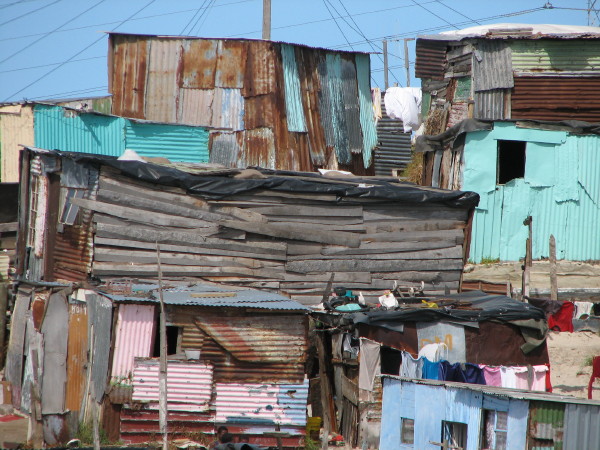
Ikamva Labantu was founded in the 1960's after Helen Lieberman, a speech therapist, ventured into a Cape Town township. As a white woman, Lieberman was shocked by the drastically different living conditions for the black and colored citizens of Cape Town (disclaimer: colored is an acceptable and widely used term here in South Africa for people of racially mixed backgrounds). These disparities were created by Apartheid, a racially charged policy that separated South Africans according to race. Apartheid began in 1948 under the racist National Party, so when Lieberman entered this township she immediately witnessed the appalling impact this policy. To give you an idea of what she saw, here is a photo of a township located in the outskirts of Cape Town:


Lieberman was inspired by the spirit of people in this township and decided that she must do something to help those living in such horrible conditions. Along with the help of some women living in this township, Lieberman founded Ikamva Labantu. The primary goal of Ikamva Labantu is to teach township citizens valuable skills and provide them with resources as a means to eventually become self-sufficient. According to Lieberman, her mission as an NGO founder is fulfilled when she is told that her clients do not need Ikamva Labantu's help anymore.

Today, Ikamva Labantu is divided into three divisions: Community Health, Community Learning and Development, and Community Resources. Ling and I have spent our time working with the Community Health division, which focuses on preventative health, physical well-being, nutritional health, mental health, and managing illnesses and diseases, including HIV and AIDS.  Our daily assignments require us to visit either daycare centers, orphanages, or senior citizen community centers. In all of these places, we complete health evaluations that will eventually help Ikamva Labantu determine how to appropriately allocate resources for its clients.

When we visit a daycare center (or "crèche", the more common local term), we are always greeted by several small children who are curious as to why we are at their school. At first, I would always try talking to them, but I soon realized that they had no idea what I was saying. This is because most of them only speak Xhosa, one of South Africa's eleven official languages, when they are this young. Once Ling and I say hello to everyone at the center, we interview the school principal, asking questions about the health status of the children. After we finish with our interview, we help our translators (who are also employees at Ikamva Labantu) weigh and measure the heights of the students. Here is a photo of Ling measuring a child's height at a daycare center:


Our duties at the township orphanages are pretty similar to those at a daycare center. The main difference, however, is we are able to ask more detailed questions about the children since orphanages typically do not have nearly as many children as the daycare centers. I personally prefer interviewing the foster mothers at these homes instead of the daycare principals because most seem to know their children quite well. Here is a photo from my experience at an orphanage:

Beginning late last week, Ling and I started our work at the senior citizen community centers. These centers are very similar to those in the United States because the purpose of each center is to provide seniors with constructive activities, hot meals, and a place to socialize with peers. I really like working with the older township population because they all seem genuinely happy that we are there to talk to them and learn about their fascinating lives. A particular instance that stands out in my mind is from when an elderly woman told me about how she was forced out of her home in downtown Cape Town when Apartheid began. She reminisced about how her life was so much better before Apartheid struck because people of all different backgrounds lived nearby one another. I will always remember the conversation that I had with this woman because it allowed me to put a face to all of the history that we have learned about thus far on our overseas excursion.

A friendly client at a senior citizen community center.
Alright, I think now is a good time for me to stop rambling about my experience at Ikamva Labantu and pass the torch along to Ling, who will share some of her highlights and personal stories with you.

Until next time,

Matt, '14

Photo Credits:


Tuesday, 10 July 2012

Hopkins students in the paper!

The Monday Paper, that is - The University of Cape Town's version of the JHU Gazette:
http://www.uct.ac.za/dailynews/?id=8171

David Worth, our host in UCT's Centre for Open Learning (http://www.uct.ac.za/continuinged/col/), contacted the paper suggesting that they come and see our program in action, and we were contacted the same day!  Here are the students in their classroom with instructor, Anna Grimsrud:
Student Christina Li 


      Enjoy the full story!